Sep 27 - Cocoa-hoarding in Ivory Coast curtailed by regulator s threat of sanctions
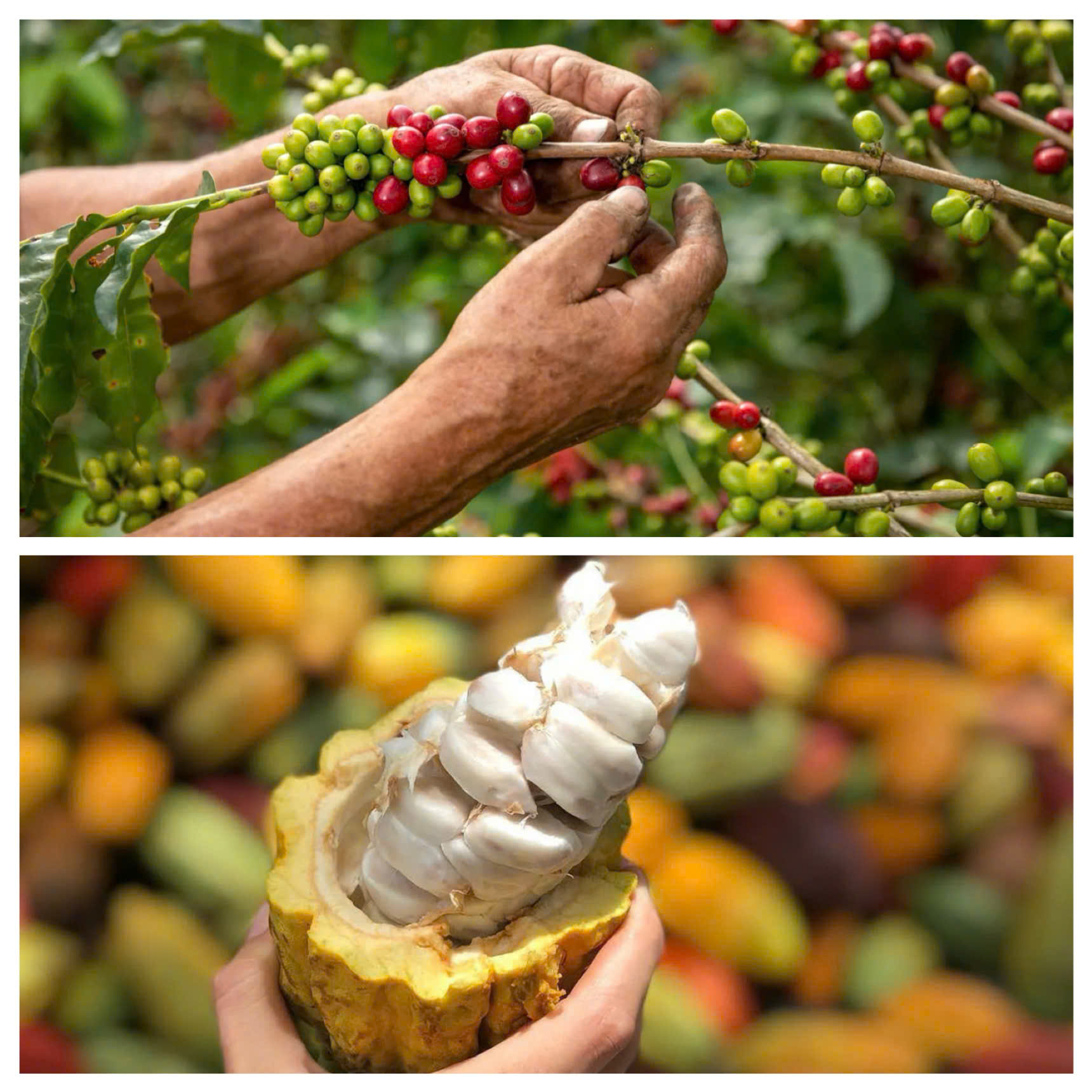
Ivory Coast s Coffee and Cocoa Council regulator has significantly curbed the hoarding of beans in September, due to the threat of sanctions against buyers and cooperatives, sources within the CCC, exporters, and buyers told Reuters on Thursday. Cocoa bean arrivals at the Ivorian ports of Abidjan and San Pedro exceeded 50,000 tons in the first three weeks of September, a significant increase from around 19,000 tons recorded for the entire month of September in 2023.
Sep 27 - The bearish and bullish cases for US corn stocks on Monday -Braun
Last year’s record-large harvest boosted U.S. corn inventory to multi-year highs, though the actual supply estimates have dwindled notably over the last year because of robust demand. The situation will be clearer on Monday after the U.S. Department of Agriculture publishes its quarterly stock survey results as of Sept. 1, which represents the end of the 2023-24 marketing year for U.S. corn and soybeans.
Sep 26 - Argentine farmers seen favoring soy over corn in 2024/25 season, exchange says
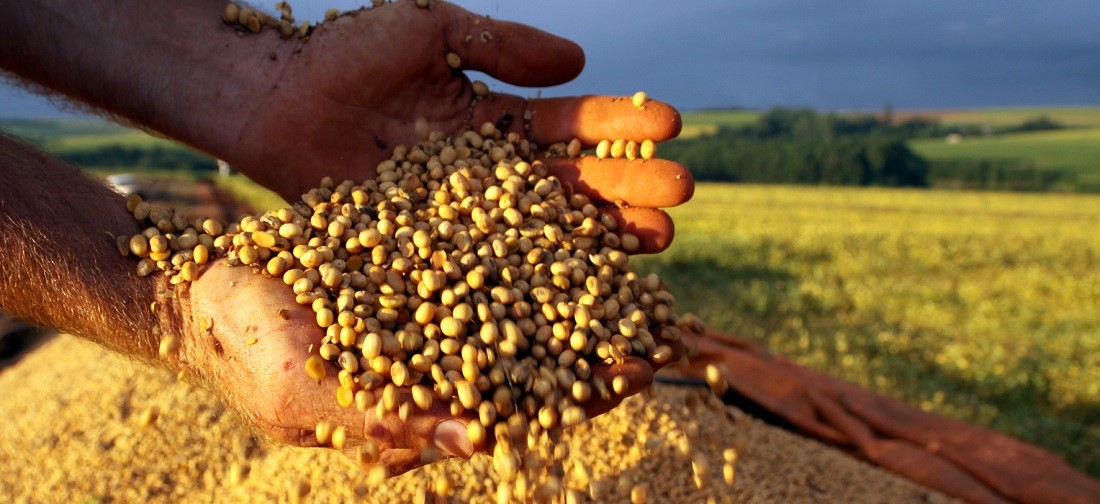
Argentine farmers are seen favoring soy over corn in the 2024/25 season on soybeans profitability and as fears of a stunt disease hitting corn persist, the Buenos Aires Grains Exchange said on Wednesday. Soy output this season is seen inching up around 3% from the previous season to 52 million metric tons, according to estimates from the exchange, while corn production should slip around 5% to 47 million tons.
Sep 26 - Low winter wheat sowing rates cloud Russia s 2025 harvest outlook
Winter wheat sowing rates in Russia have fallen to an 11-year low due to drought in key producing regions, clouding the outlook for the 2025 grain harvest, the Sovecon consultancy said on Wednesday. "As of Sept. 20, 8.3 million hectares had been sown with winter grains, compared to 9.3 million hectares a year earlier and the five-year average. This is the lowest figure since 2013," Sovecon said.
Sep 25 - Promising rebound in US wheat exports could be spoiled by Russia - Braun
After their worst campaign in 52 years, U.S. wheat exports are expected to reach four-year highs in the current marketing year thanks to a strong crop and relatively tame prices. Robust shipments have recently supported that forecast.
Sep 25 - Colombia to produce 15% more coffee in 2024, growers federation head says
Colombia, the world s top producer of washed arabica, will produce 13 million 60-kg bags of coffee this year, an increase of 15%, thanks to varieties that are more resistant to extreme climate conditions and fungus, the head of the national growers federation said on Tuesday. Brazil and Vietnam, the world s top producers of coffee globally, have suffered output difficulties this year because of drought, sending international prices higher.
Sep 24 - Rice from Vietnam/Myanmar offered lowest in Indonesia’s tender, traders say
The lowest price offered in the international tender from Indonesian state purchasing agency Bulog to buy about 450,000 metric tons of rice was estimated at $539.30 a ton cost and freight for rice expected to be sourced from either Vietnam or Myanmar, European traders said on Monday. The lowest offer was said to have been made for up to 30,200 tons.
Sep 24 - Indian refiners cancel palm oil contracts on duty hike, price riseIndian refiners cancelled 100,000 metric tons of palm oil purchases for delivery between October and December, as New Delhi s move to raise import duties amid a rally in overseas prices prompted them to book profits, five trade officials told Reuters. Refiners in the world s largest importer of palm oil cancelled this quantity over the past four days, including 50,000 tons on Monday, after Malaysian palm oil futures jumped to their highest level in 2-1/2 months.
Sep 24 - USDA reports corn harvest 14% complete, soy 13%; ratings unchanged
The U.S. Department of Agriculture s weekly crop progress report showed the U.S. corn harvest as 14% complete, beneath an average of analyst expectations but ahead of the five-year average of 11%. Ten analysts surveyed by Reuters on average had estimated corn harvest progress at 17%.
Sep 23 - Recent strength in US soy sales not enough to lift export prospects - Braun
The United States is coming off one of its worst soybean export seasons in recent memory, with shipments rivaling those from a few years ago when the No. 2 exporter was locked in a trade war with top buyer China. Export sales of U.S. soybeans for 2024-25, which began Sept. 1, have been stronger than average over the past month as China has finally stepped in to make purchases.
Sep 23 - Brazil plants 0.5% of projected 2024/25 soybean area, behind last cycle, Safras says
Brazilian farmers have planted 0.5% of the projected 2024/25 soybean area in the country, below the 1.6% seen in the same period a year earlier, consultancy firm Safras & Mercado said on Friday. The level was also below the 1.5% historic average for the period, Safras said.
Sep 23 - Pulse Update: Frost, dry chop chunk from lentils, fabas (Grain Central)
- A SERIES of frosts and ongoing dry weather over much of South Australia and Victoria may have wiped as much as 500,000 tonnes from the Australian lentil crop. Yield potential for many southern faba bean crops has also been hit by frost.
- The lack of a finishing rain for chickpeas is pulling the northern pulse’s yield potential back from above average to average in some cases, and harvest is under way.
- Trade sources report production and quality concerns have tempered grower interest in forward selling, and prices are little changed from last month.
Chickpeas
Australia’s chickpea harvest has started at the few North Queensland properties where they are grown.
In Central Queensland, some growers have made a start, and loads are starting to filter into receival sites.
At Gindie, south of Emerald, grower Gordon Staal has made a start on his earliest chickpea crops, which are likely to be downgraded due to rain on ripening pods.
They were sown on shallower soils, and around two weeks earlier than the bulk of the region’s crops, which were planted in late April and early May.
“We’ve made a start; early crops are weather-damaged, but the mid to late-season ones will be the better ones,” Mr Staal said.
This year, Mr Staal planted no wheat and around 1800ha of Kyabra chickpeas, and is expecting yields of 1.7t/ha on the early weather-damaged crops, and 2.5t/ha on his later-sown crops.
With 5000t of on-farm storage, Mr Staal will concentrate on getting the crop off and marketing it later, particularly if bulk-handling or packing sites are only taking in the top CHKP1 grade.
He said variable soil and different run-off rates make for a harvesting challenge “like two crops in one” where early-maturing pods are brittle, and later ones are tough.
Trade sources report some truck drivers are already booked to deliver chickpeas from Gindie and other CQ regions south of Emerald direct to port in Brisbane, where at least 500,000t is booked to load by late February, the expected cut-off to catch the tariff-free window in India.
The market is currently trading at $1060/t delivered Brisbane for new crop, or $1020/t to either bulk accumulation or container packing sites on the Darling Downs.
In southern Qld, independent agronomist Paul McIntosh said yield outlooks are variable, based largely on whether crops got good winter rain.
“That flat Downs country that had some moisture might be looking at 2t/ha, but on lighter soil, it might be less than 1t/ha,” Mr McIntosh said.
At Walgett, Outlook Ag agronomist Greg Rummery said the yield outlook without a finishing rain looks like 1.5-2t/ha.
“The chickpea harvest will start in early November, and we’ve love a rain as soon as possible ahead of that,” Mr Rummery said.
“We dodged frost last week that’s knocked the odd flower off, and we’ve got two 31-degree days coming.
“A fall of rain now would be nice.”
Chickpea prices are down around $40/t from the recent highs seen last month.
Trade sources say growers are unlikely to make further sales ahead of either a decent finishing rain, or a solid start to harvest due to minor concerns about yield, and major concerns about getting downgraded by rain at harvest.
Faba beans
Crops in central and northern NSW and southern Qld are generally looking at above-average yields for fabas, most of which are still flowering.
In parts of southern NSW and Vic, and much of SA, yield potential has been hit hard by frost, and many crops will now struggle to make average yields.
Because of their much greater biomass than lentils, anything less than a 20mm-plus rain would do little rebuild yields following losses of flowers and setting pods.
“Beans are really going to struggle in the current environment,” Pinion Advisory commodity risk manager Chris Heinjus said.
Lentils
ABARES in early September revised up its forecast for new-crop lentils to 1.7 million tonnes (Mt), up around 100,000t from the previous estimate released in June.
Trade sources are now saying 1-1.2Mt seems more likely after successive frosts and ongoing dry conditions hit crops last week, and the weekend brought little to no rain.
However, some frost-hit lentil crops are already showing signs of new growth based on some light and patchy falls in recent days, and subsoil moisture.
Mr Heinjus said some lentil crops were being cut for hay due to poor yield prospects and quality concerns about what frost may have done to setting pods.
“Everything’s a bit challenging in South Australia, and that’s probably the understatement of the year,” Mr Heinjus said.
“A number of lentil crops haven’t even achieved canopy closure.”
Depending on topography and soil moisture, some of those crops exposed crops have dropped all their flowers, with spring frost coming on top of a year to date of decile zero to two rain for many growers.
“There’s no way you can quantify the loss occurred, but in my mind, it’s not insignificant.”
“It doesn’t matter what postcode you go into, there’s frost risk; we’re still within the window…for the next four to six weeks.”
Agronomists across southern NSW, Vic and SA are working with clients, and taking part in workshops, to help growers make assessments after what to do with their crops.
Options are to carry through to grain, cut for hay, or green or brown manure the crops to provide some groundcover ahead of summer.
Lentils
Current-crop lentil prices have risen around $30/t delivered Wimmera packer to $800/t, and around $10/t more for new-crop in the December-January slot.
“Our frost has woken up the overseas market,” ETG pulse trader Todd Krahe said.
“We could have lost a third of the crop through frost and dry conditions.”
Mr Krahe said the precarious nature of the growing season has limited forward selling from the state.
“Growers have been very cautious this year; I’d say 90 percent of our (new-crop volume) is from the big commercial guys.
“Family farmers have been very cautious.”
That said, SA and Vic will still have plenty of lentils to load on to early shipments, with the Lower Eyre Peninsula in SA and Vic Wimmera faring the best in terms of yield outlook.
Mr Heinjus said the container trade may come alive to deal with a crop that is smaller than expected, and may require grading to remove off-spec lentils.
“We might not have the volume in the bulk market to do as much as we’d hoped; the question is: Do we do containers?